Vaxowave Lumina: Rethinking How We Learn Today
When was the last time you attended a training session, completed an assessment, received your certificate, and then, a few weeks later, struggled to remember much of what you had learned?


Many of us can relate to that experience.
For decades, we’ve approached learning and development through structured courses, classroom sessions and increasingly, digital learning platforms. We’ve become exceptionally good at delivering content and measuring participation. But there’s a question we perhaps haven’t spent enough time answering: Are people actually becoming more capable?
This question has increasingly shaped our thinking at Vaxowave, especially as artificial intelligence begins to redefine how we work, learn, and develop skills.
The Difference Between Learning and Knowing
One of the biggest limitations of traditional learning is the assumption that exposure to information automatically translates into understanding, and that understanding translates into practical application.
But learning rarely works that way.
Think about learning to drive. You can study the rules of the road, memorise every road sign and pass your theory examination. Yet none of that necessarily prepares you for navigating a busy intersection during peak-hour traffic.
Confidence and competence come through practice, feedback and repetition.
The same principle applies in the workplace.
A manager doesn’t become effective at difficult conversations by attending a leadership workshop alone. A customer service representative doesn’t develop empathy simply by watching a presentation. And a graduate doesn’t develop sound professional judgement through theoretical knowledge without practical exposure.
We develop capability by doing, reflecting and doing again.
Where Artificial Intelligence Changes the Conversation
What’s particularly interesting about AI is its potential to make learning more responsive to individual needs.
Traditionally, personalised learning has been difficult to deliver at scale. People absorb information differently, progress at different speeds, and require different levels of support.
AI introduces the possibility of learning experiences that respond to these differences.
Imagine being able to ask questions without hesitation, revisit difficult concepts as often as necessary or practise a challenging workplace conversation without the fear of judgement.
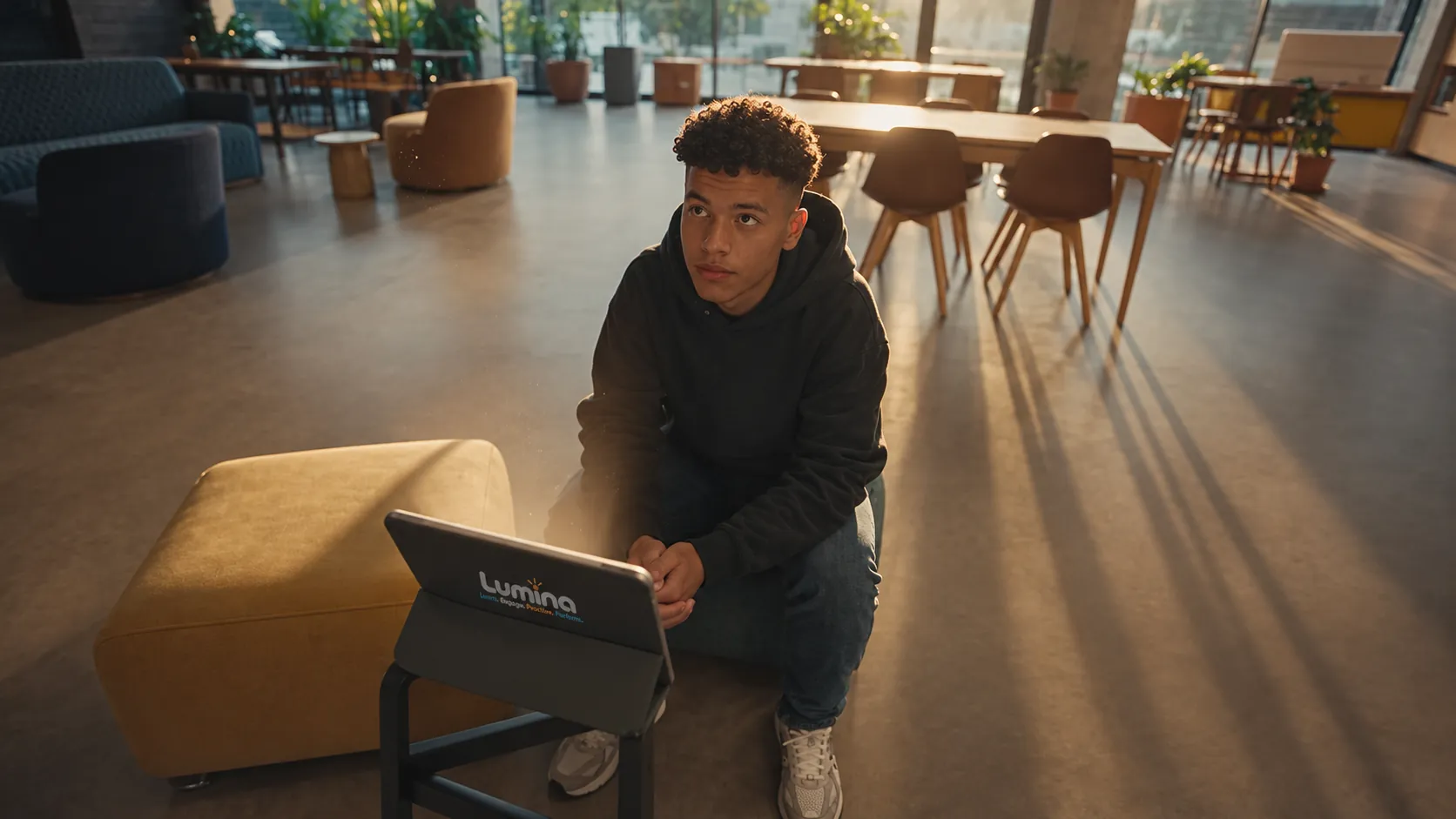
These are some of the ideas that informed our development of Lumina, an AI-powered learning platform at Vaxowave.
Through conversational AI tutoring, adaptive assessments and realistic voice-based simulations, we’ve been exploring how technology can support not just the acquisition of knowledge, but its application.
The underlying philosophy is relatively simple: learning should be an ongoing, interactive process rather than a once-off event.

We Need to Rethink What We Measure
Another important conversation is how organisations define successful learning.
Completion rates, attendance registers and certificates certainly have their place. But they don’t necessarily tell us whether someone is better equipped to perform their role.
What if we paid greater attention to demonstrated competence?
Can an employee apply what they’ve learnt? Can they navigate unfamiliar situations? Are they developing the confidence and judgement their responsibilities require?
These questions are becoming increasingly important as AI automates many of the routine tasks through which professionals have historically gained experience.
If technology removes some of those early learning opportunities, we have a responsibility to create alternative environments where people can practise, experiment and develop sound judgement.
This is also why we’ve incorporated practical simulations and visibility into learner progress within Lumina. The intention is to explore more meaningful ways of understanding capability development, beyond simply tracking content consumption.
Technology Should Expand Human Potential
For us, the most exciting aspect of AI in education isn’t the technology itself.
It’s the possibility of making meaningful learning opportunities more accessible, particularly to people who may not otherwise have access to personalised guidance, coaching or practical development environments.
Of course, technology cannot replace every aspect of human mentorship, experience or connection. Nor should it.
But it can complement these experiences and potentially make individualised support available to more people.
As organisations rethink the future of work, perhaps we should also rethink the future of learning.
Because ultimately, the measure of great learning isn’t how much information someone has consumed, but what they are empowered to do with it.
And that is a future worth investing in.
Originally published by Business Media MAGS on 20 November 2026.